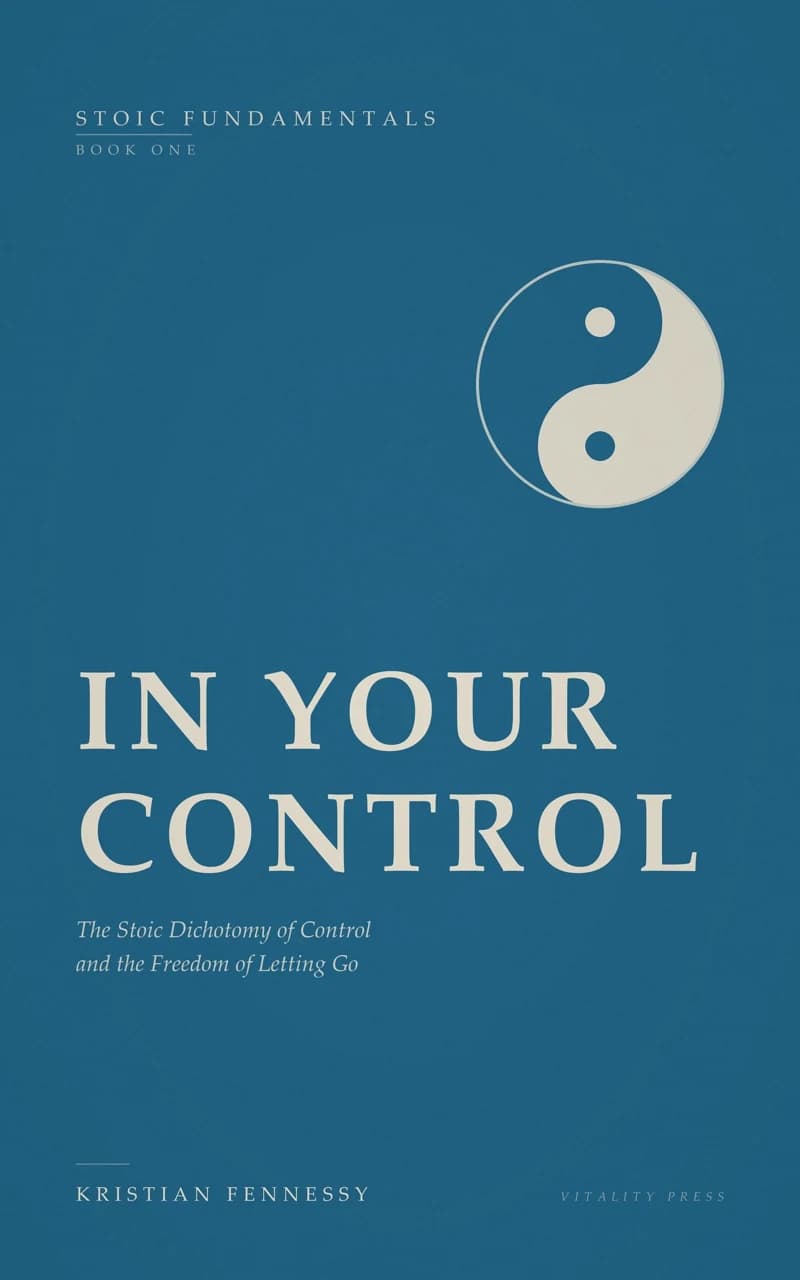
Out now · Book One of the series
In Your Control
The Stoic Dichotomy of Control and the Freedom of Letting Go
“Focus on what you can control” — finally explained well enough to use. One idea, one whole book, sourced to Epictetus, Marcus Aurelius, and Seneca — in ebook, paperback, and hardcover.
Kindle · $4.99 — In Your Control on AmazonPaperback · $12.99 — In Your Control on AmazonHardcover · $21.99 — In Your Control on Amazon
On Amazon · Free to read on Kindle Unlimited
Of things, some are in our power and others not. In our power are opinion, pursuit, desire, aversion, and, in one word, whatever are our own actions. Not in our power are body, property, reputation, command, and, in one word, whatever are not our own actions.
Epictetus put that first, and everything else in Stoicism rests on it. In Your Control takes it all the way down.
One Stoic idea. A whole book. Sourced to the people who said it.
Most books on Stoicism give you a survey — a chapter each on the ideas everyone quotes. The Stoic Fundamentals series gives one idea the whole book: what it means, where it comes from, where it gets hard, and what to do with it on a Tuesday.
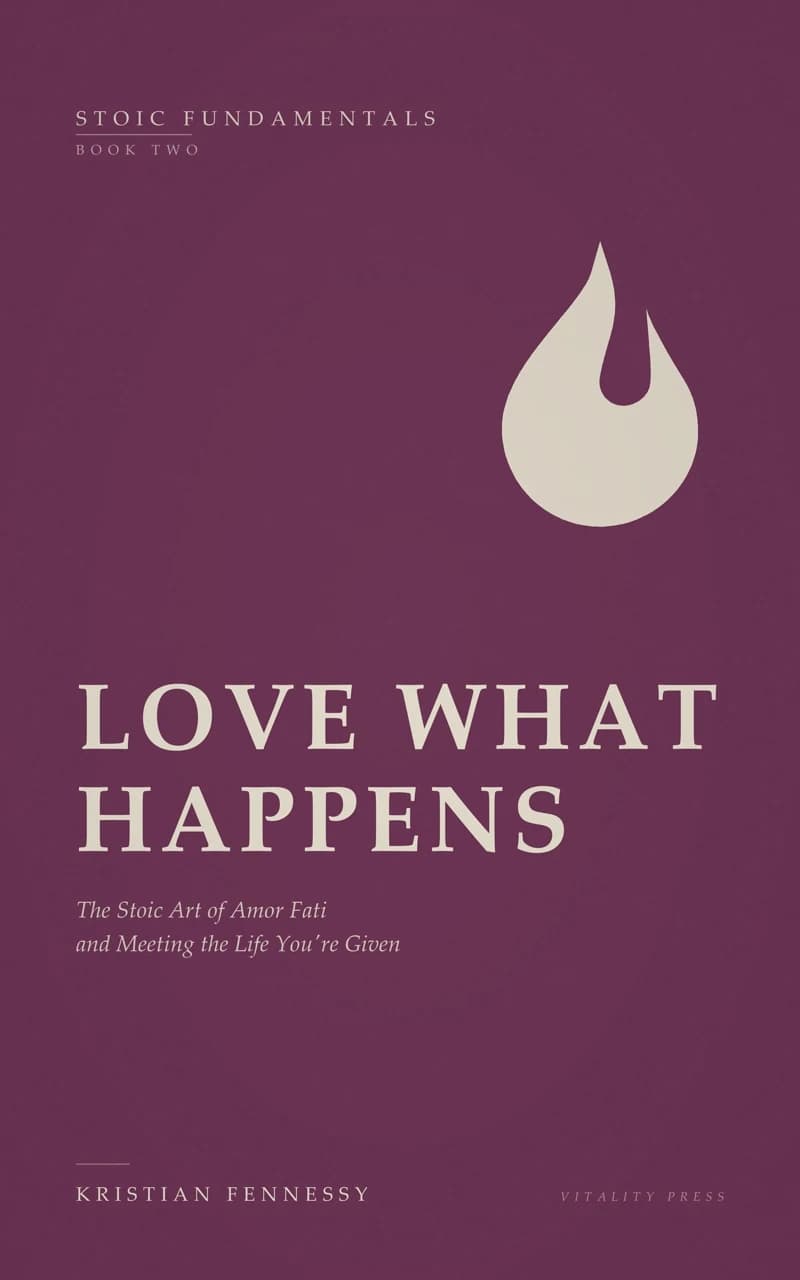
Book Two · Out now
Love What Happens
Amor fati — “love your fate” — finally explained well enough to actually live.
Kindle · $4.99 — Love What Happens on AmazonPaperback · $12.99 — Love What Happens on AmazonHardcover · $21.99 — Love What Happens on Amazon
On Amazon · Free to read on Kindle Unlimited
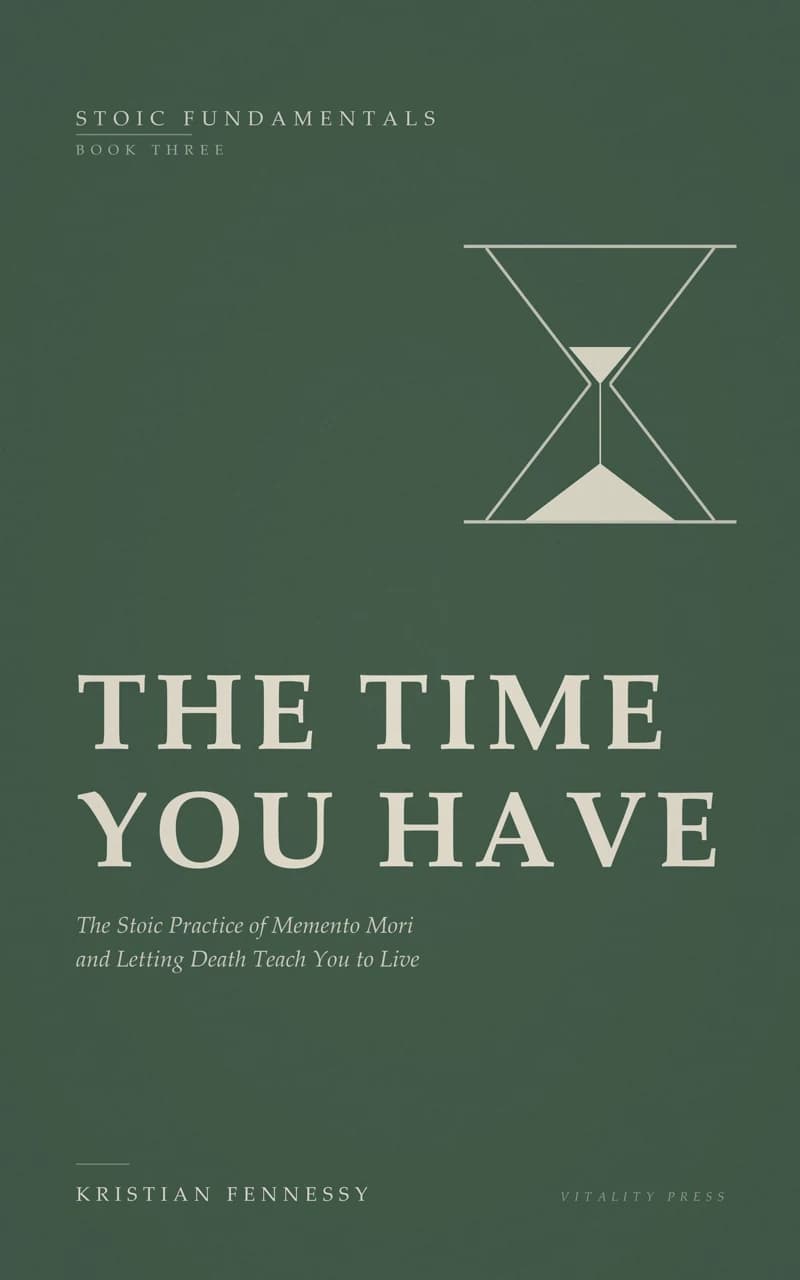
Book Three · Out now
The Time You Have
Memento mori — “remember you will die” — and feel more alive for it.
Kindle · $4.99 — The Time You Have on AmazonPaperback · $12.99 — The Time You Have on AmazonHardcover · $21.99 — The Time You Have on Amazon
On Amazon · Free to read on Kindle Unlimited
Every quotation, traceable to the page it came from
Most Stoic quotations in circulation cannot be traced. They arrive without a source, often without a translator, and frequently with wording no translator ever wrote. A quotation you cannot check is a quotation you cannot trust — which is an odd foundation for a philosophy about seeing clearly.
This series quotes only public-domain translations, one locked edition per work, and verifies every passage against that edition before it is printed. The same applies to this website.
The ideas, explained free
You do not have to buy anything to understand these. Each explainer is the honest version: what the idea is, what it is not, and where it stops working.
The dichotomy of control
The dichotomy of control is the Stoic distinction between what is up to us and what is not. Epictetus placed it first in the Enchiridion: our judgments, desires, and actions are in our power; our bodies, reputations, property, and outcomes are not. Wisdom is spending yourself only on the first.
Amor fati
Amor fati is Latin for “love of fate”: the Stoic practice of meeting what happens not with resignation but with acceptance, and finally with something like welcome. Marcus Aurelius put it plainly — love that only which happens to you. It asks you to stop wishing the given were otherwise.
Memento mori
Memento mori is Latin for “remember you will die”: the Stoic practice of keeping your own death in view so that you actually live the time you have. It is not morbid. It shrinks the trivial back to its real size and ends the postponement of the life you mean to start.
All three books are out. Which one first?
Starting cold, read them in order: In Your Control, then Love What Happens, then The Time You Have — control, then acceptance, then mortality. Every book stands alone, so if something specific brought you here, start with the idea that fits it.